Click a link box below to jump directly to a topic.

About covenants
What is a conservation covenant?
A conservation covenant is a voluntary, legal agreement between a landholder and one or two conservation organizations such as GaLTT, designed to protect ecological values on private land in perpetuity, without requiring the landholder to part with the land. Its purpose is to conserve land in its current state in perpetuity for environmental reasons. A conservation covenant “runs with the land”. This means that the covenant document is registered on the title to the property and becomes a permanent attachment to the title. If the property changes hands, the covenant remains in force.
In the covenant, the landholder promises to protect the land in specific ways. This usually includes items like not removing native flora (including trees) or fauna, not subdividing the land, not altering watercourses or using pesticides.
Each covenant is specific to a given property. Typically the area of land with a house and garden are not included in the covenant area.
Once established, regular monitoring of the covenant area is the legal responsibility of the holder(s) of the covenant. Annual visits are made to monitor the land and document its status. If the landholder or someone else violates the terms of the covenant, the conservation organization has the power to impose fines. However, this is rarely necessary.
Does this mean that covenanted land becomes public land?
No. The fact that a landholder has entered into a covenant agreement to preserve a wetland or forested area on his/her property does NOT make that property accessible to the public. Of course, an owner may agree to allow public access to the land if he/she wishes. Some of Gabriola’s covenants such as Robinson Woods (south end between Cooper and Thompson roads) and the McRae Covenant (north end behind the Museum) have trails open to the public. Other covenanted properties have no public access.
Why do people enter conservation covenant agreements?
Many owners who choose to enter into a conservation covenant agreement are motivated by the desire to preserve a property or portion of property that has significant ecological features such as a wetland or rare species or mature forest. Their actions today, are a gift to the future.
Another motivation can be a tax benefit from entering into such an agreement. For example, the Natural Area Protection Tax Exemption Program – NAPTEP, operated by the Islands Trust Conservancy (ITC), may provide such a benefit. “The Natural Area Protection Tax Exemption Program (NAPTEP) is a financial incentive to choose land protection over development. When you register a conservation covenant through NAPTEP, you receive an annual property tax exemption of 65% on the protected portion of your land. This means you save money annually in exchange for leaving the natural areas on your land alone for native species to enjoy. These tax savings can add up quickly, depending on the size of the land you’re able to protect.” (Islands Trust website, retrieved 2021-09-09). You can obtain more information about NAPTEP from the Islands Trust Conservancy NAPTEP link above, or from the Islands Trust office on Gabriola (on North Road just past the school).
US tax payers who wish to donate environmentally significant Canadian land or put a protective covenant on it may find it advantageous to work with the American Friends of Canadian Conservation (AFCC—previously called American Friends of Canadian Land Trusts). Gifts to them are tax deductible in the US and such gifts of land and conservation easements are not subject to Canadian capital gains tax. See also Partnerships, below.
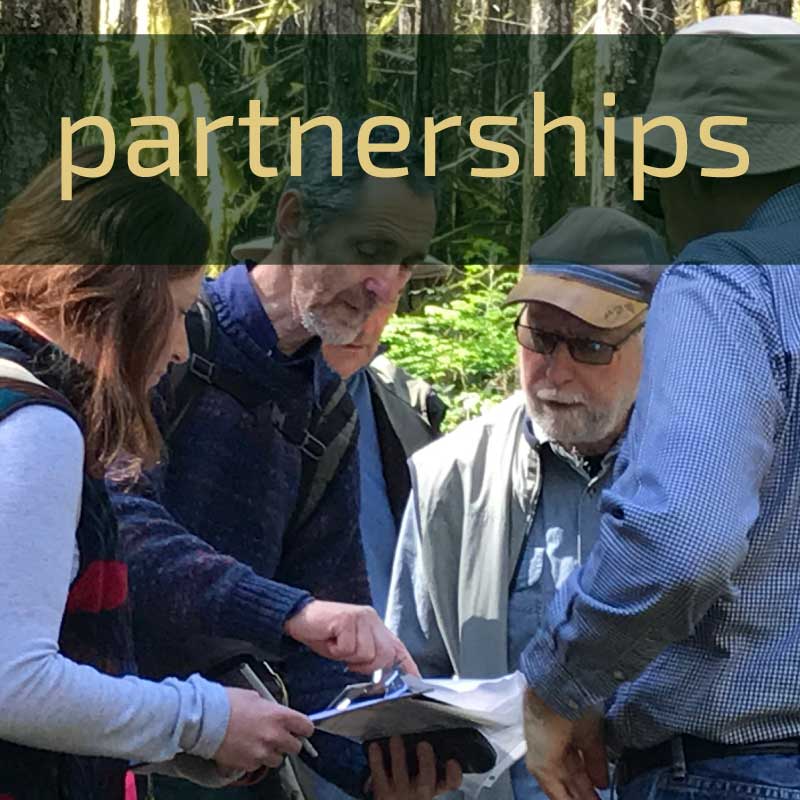
Partnerships
The Islands Trust Conservancy: NAPTEP
The ITC holds several covenants on Gabriola, partnering with GaLTT on two of them (see “The role of GaLTT” below).
The Natural Area Protection Tax Exemption Program (NAPTEP) is a financial incentive to choose land protection over development. When you register a conservation covenant through NAPTEP, you receive an annual property tax exemption of 65% on the protected portion of your land. This means you save money annually in exchange for leaving the natural areas on your land alone for native species to enjoy. These tax savings can add up quickly, depending on the size of the land you’re able to protect. (Islands Trust website, retrieved 2021-09-09)
American Friends
AFCC is recognized by the US Internal Revenue Service as a publicly supported charitable organization. Gifts to them are tax deductible in the US and such gifts of land and conservation easements are not subject to Canadian capital gains tax.
Their website at www.conservecanada.org contains details of how American Friends works and includes many of the forms required to complete a transaction. For specific information, you can
- call 360-515-7171
- email info@conservecanada.org
Potential partnerships…
Although The Land Conservancy of BC (TLC) holds more than 220 covenants across the province, they do not yet hold land on Gabriola.
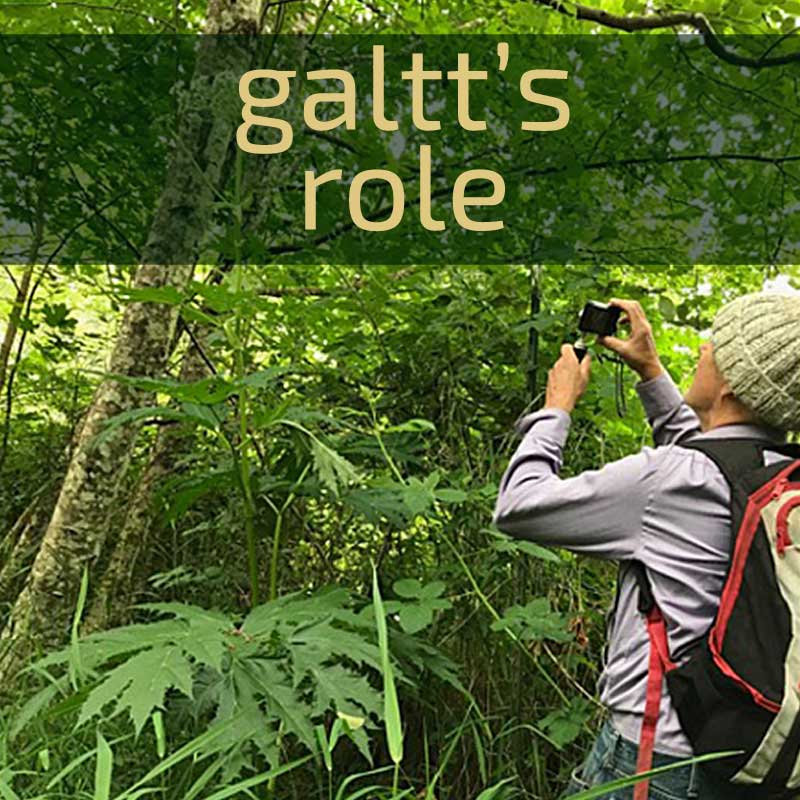
The role of GaLTT
In 2010, GaLTT received formal government authorization to be a conservation covenant holder.
Having a local authorized organization involved in negotiating the terms of a conservation covenant can be advantageous. Email conservation@galtt.ca if you would like more information about putting a covenant on your land.
GaLTT’s covenants
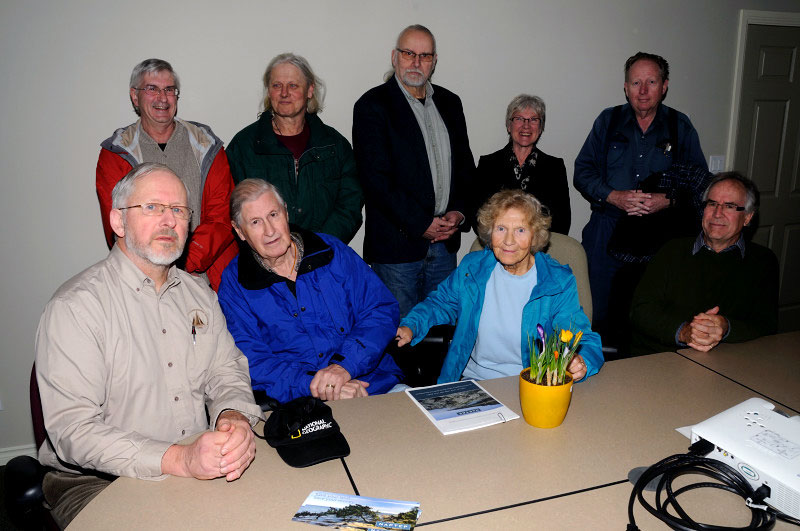
Our first conservation covenant was signed on March 18, 2011 by Directors Tom Cameron and John Peirce. This covenant is co-held by the Islands Trust Conservancy and is the second NAPTEP covenant on Gabriola. Known as the Bachmann Property, it is on a tract of forested land near Brickyard Hill, then owned by Karl Bachmann and Marianne Koenig. Since the covenant was signed, the property has changed hands and the covenant is being honoured by the new owners.
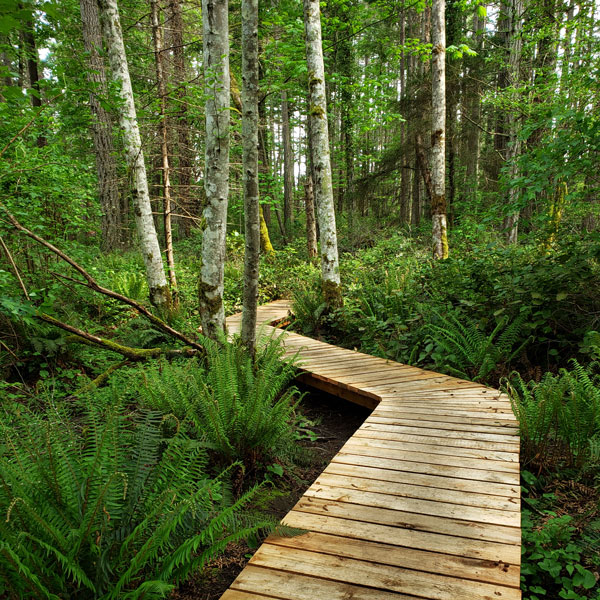
Gabriola landowner Sally Robinson, who is an American citizen, has put a covenant on a defined area of her forested property (known locally as Robinson Woods) between Cooper and Thompson Roads. The covenant allows public use of the pre-existing trail system. American Friends holds this covenant—their first in BC. As the local land trust, GaLTT carries out the annual monitoring of the covenant as well as maintaining the public trails and controlling invasive plants on the property.
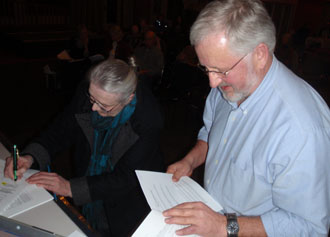
S’ul-hween X’pey (Elder Cedar Nature Reserve) is owned by the Islands Trust Conservancy. The 65-hectare (160-acre) reserve on the north side of North Road was established in 2006. The covenant on this land, signed by GaLTT at our AGM in February 2012, is co-held by the Nanaimo Area Land Trust (NALT).
President John Peirce signing the covenant on S’ul-hween X’pey on behalf of GaLTT, Trustee Gisele Rudischer witnessing.
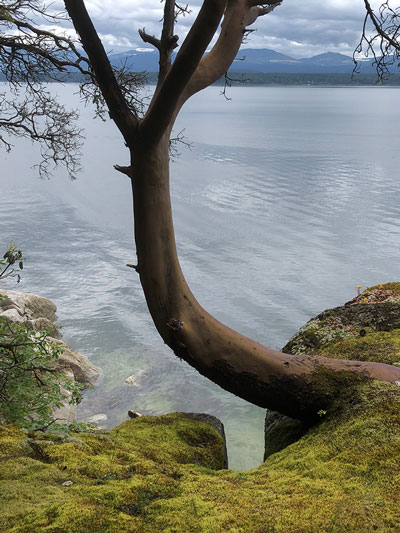
Looking toward Vancouver Island from Link

Our most recent conservation covenant was registered with the BC Land Titles office in October 2024. The 8.2-acre property near Silva Bay is owned by Yarrow Koontz and public access is not permitted. The Koontz property contains several different natural habitats of high conservation value, including young and maturing forests of different types, a forested wetland, rare cliff habitat, and Garry oak bluffs. The covenant is co-held by GaLTT and the Islands Trust Conservancy.
