
Looking for resources for dealing with invasives?
Lots of information on some the most problematic plants follows on this page, and more resources are listed on our Conservation Resources page.
The problem
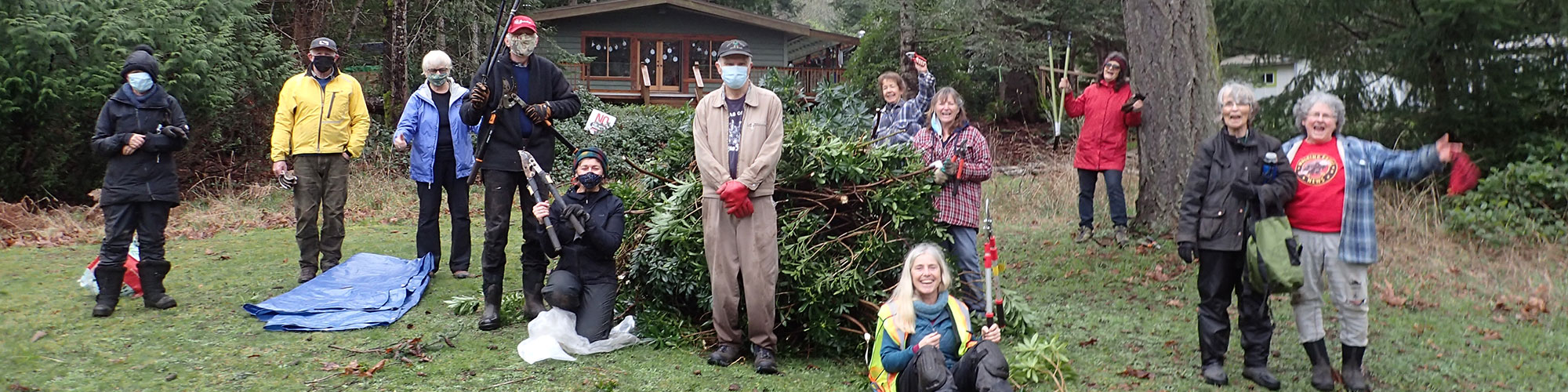
Invasive plants are spreading aggressively across Gabriola and all of BC, crowding out local native plants. Some of them are so aggressive they even invade concrete foundations, others are toxic to people or livestock. They are spread by natural means but also through inappropriate plantings by gardeners, people feeding birds, and increased travel and trade along transportation corridors.
It’s not just plants that are a problem: abandoned pet goldfish and rabbits are a serious problem on Vancouver Island and could easily become so on Gabriola. American bullfrogs have decimated local tree-frog populations in Hemer Lake, near Nanaimo.
GaLTT’s Invasive Species Committee leads our work, calling on a large and dedicated team of members and volunteers to manage invasive plants on public lands, and educating islanders about how to best deal with them on their own properties. Our work at first focused on Scotch broom, but grew drastically in recent years, to include Tansy ragwort, and more recently, Daphne laurel. Seeds can remain viable in the ground for many years, so the work seems endless.
What is invading Gabriola?
Click a link box below to learn about the worst of our invaders.
Apart from those linked above, some common Gabriola invasives include beloved plants like Himalayan blackberry, oxeye daisy, periwinkle, and holly, as well as familiar garden pests such as thistles and bindweed.
Eradicate, Contain, or Control?
GaLTT’s new Invasive Plants brochure (2025) categorizes invasives based on management priorities: you can download a home-printer-friendly PDF of it by clicking the link.
- ERADICATE: plants that are found in small numbers—it’s critically important to eradicate them before they spread
- CONTAIN: these plants have established large infestations in many parts of the island; control them to prevent them spreading.
- CONTROL: infestations of varying sizes are common; control them to limit their spread into parks and other conservation areas.
A note on herbicides
Although they are often recommended by specialists as the most reliable way to control or remove some invasive species, many people prefer not to use them because of possible damage to the environment. If you do not wish to use them, be prepared to work on the eradication of invasive species over a substantial period of time.
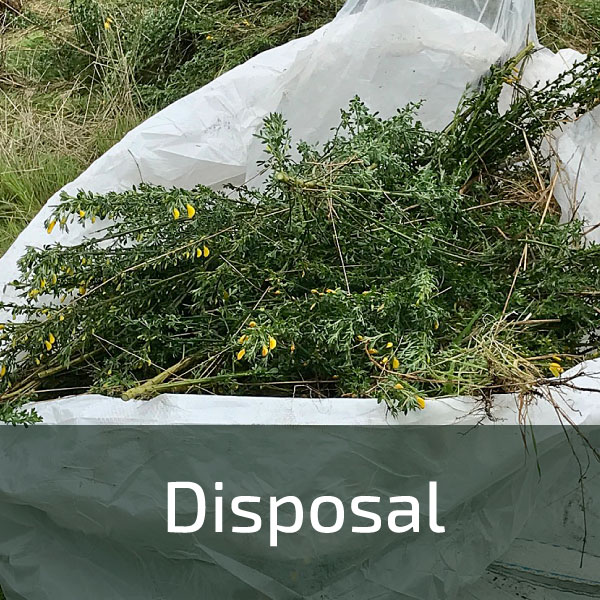
But how do I get rid of the yard waste?
Disposal of invasives is a big problem on Gabriola. Click the Disposal image to find out your options.
If you want to help
If you would like to join GaLTT’s team working to control Gabriola’s invasive plants, please email invasives@galtt.ca. Here’s what we do:
Activities
Our large and dedicated team of volunteers can be called to remove invasives on public lands—in parks, yes, but also on road allowances and other such locations. The scale or work ranges from big-event annual work parties such as Drumbeg’s annual broombash to smaller year-round work bees at pop-up locations around the island.
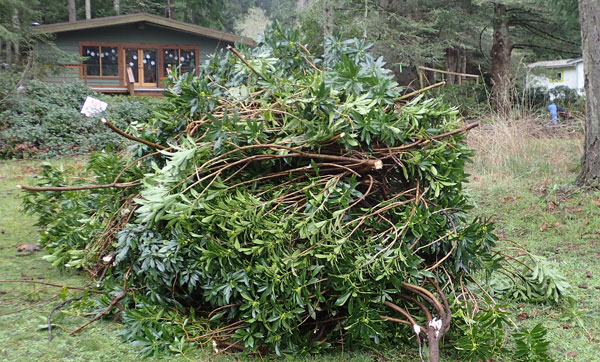
We’ve also helped neighbourhoods to organize themselves to take on invasives. In 2021 there was an enormously successful neighbourhood initiative in the Whalebone area removing huge piles of Daphne laurel.
Invasives control on private lands
GaLTT’s Invasives team works only on public lands—we have a lot of volunteers, but not enough to take on more than that! We help landholders with advice on best invasives-control practices for their own properties, and by working with our Communications Committee to produce educational materials and newspaper articles about how to identify and manage Gabriola’s worst invasive plants.
Qualified local contractors
In 2021 we held two very successful training workshops about invasives management for landscaping and gardening contractors. You can download a list of landscaping or yardwork businesses that have completed our workshop (current list effective March 2021).
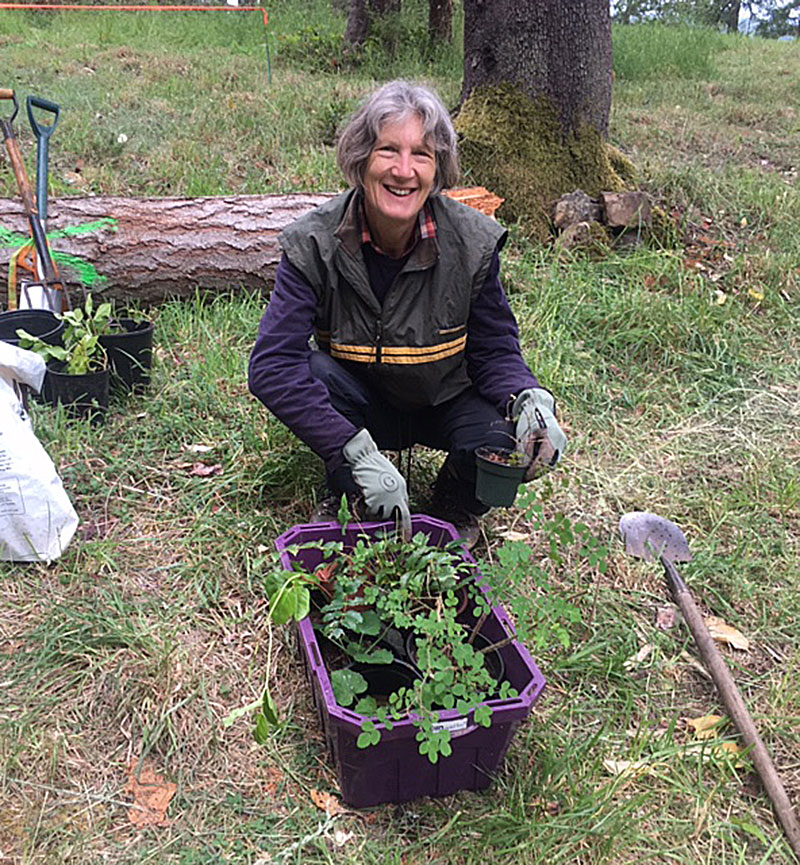
Restoration and the Native Plant Depot
If you simply remove one invasive, another will almost certainly move in. To really control them, you have to replace invasive plants with something else—preferably native species—so that new invasives cannot spread into the space. Suitable attractive native plants include Oregon grape, sword fern, Nootka rose, flowering currant, salmonberry and many others.
In 2021 our Invasive Species and Community Engagement Committees began a new joint project, the Native Plant Depot at the Commons. The Depot operates in spring and fall, providing a way for people to donate native plants and share them with others who are looking to restore habitat. (Inventory is variable and the Depot is closed during the hot summer months unsuitable for transplanting.)
Clearing land? If you plan to clear part of your land, please contact us first. With landholder permission, our Rescue Team will dig up and remove native species and take them to GaLTT’s Native Plant Depot. There is no charge, no disruption to your work, and we will accommodate your schedule.
Want to donate some native plants? If you have plants to donate, please pot them and drop them off at the depot. If you need a pick-up or you need a Plant Rescue Team to dig them out, please email programs@galtt.ca.
Want to make a more natural garden to help with conservation? You can pick up native plants for free from the Depot (inventory is variable). If you wish to make a donation for your plants you can click on the Donate button in our header bar.
Working cooperatively
The Invasive Species committee advocates on relevant issues to government agencies—one example is our work attempting to find a viable long-term solution for the safe disposal of invasive plants. We also aim to work cooperatively on areas of common interest; for example, we have actively worked under contract with BC Parks for a number of years to manage broom in Drumbeg.
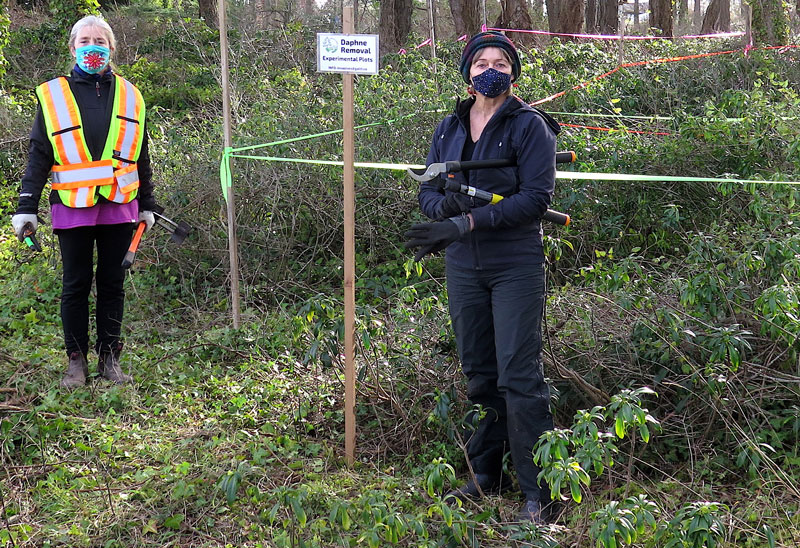
Research and Restoration
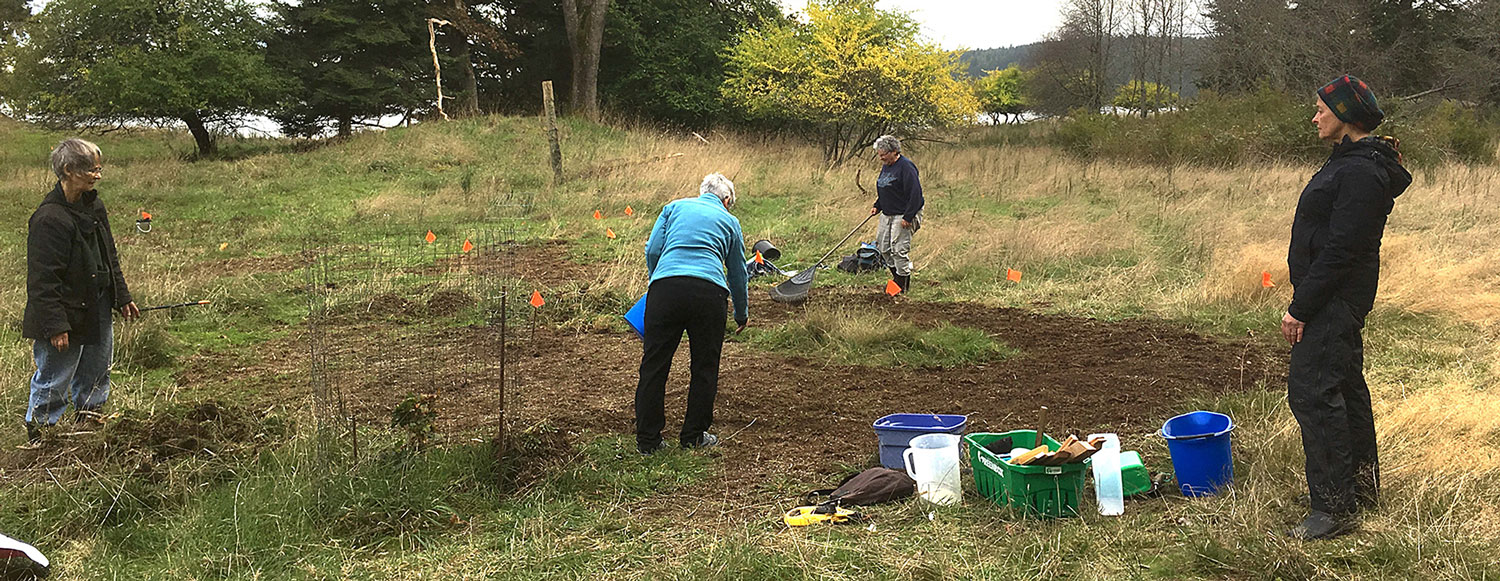
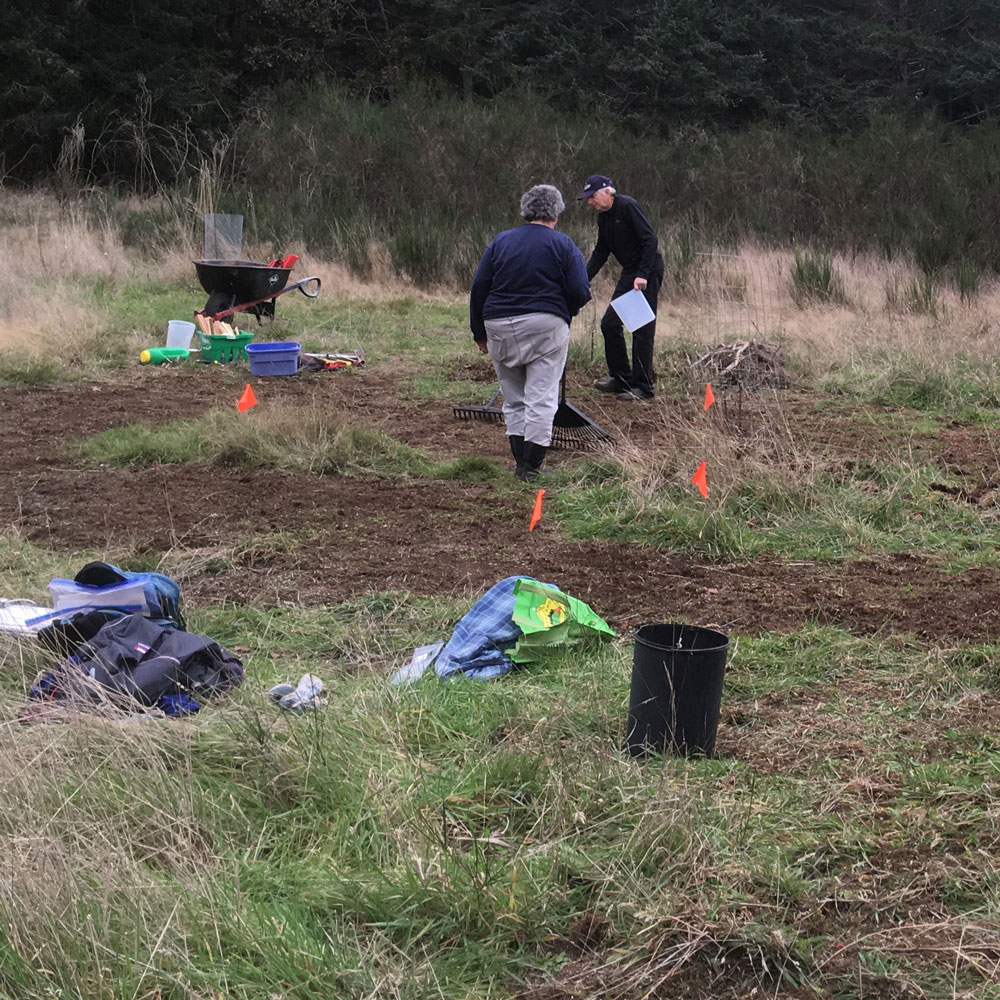
GaLTT is lucky to have volunteers with an active interest in research. These members have set up individual research plots to test the best ways to manage broom and daphne over a two-year period.
At Drumbeg volunteers have reseeded test plots as part of the process of rehabilitating land cleared of broom. Work continues in consultation with BC Parks, archaeologists, and a Snuneymuxw elder as we attempt to eradicate both broom and opportunistic periwinkle and restore the camas meadow.
Scotch Broom
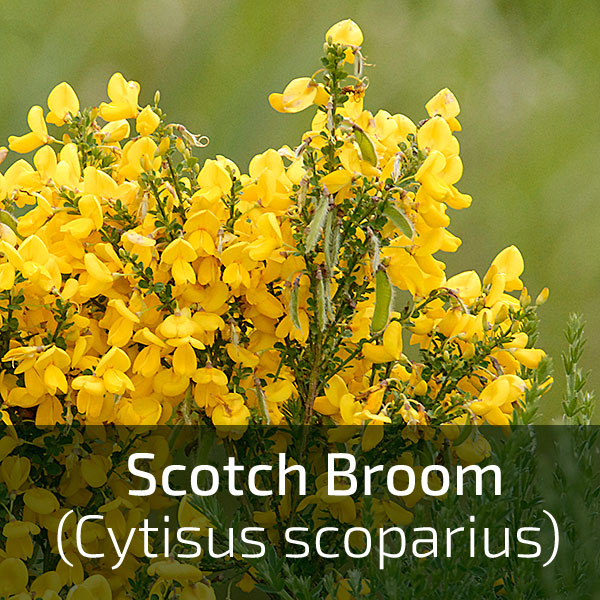
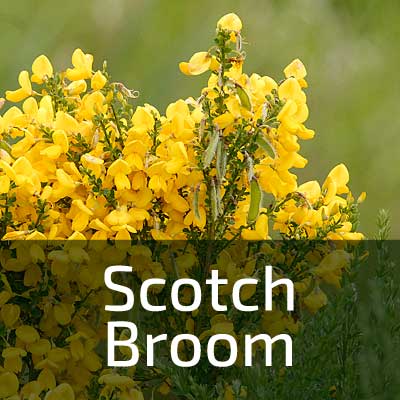
Scotch broom (Cytisus scoparius)
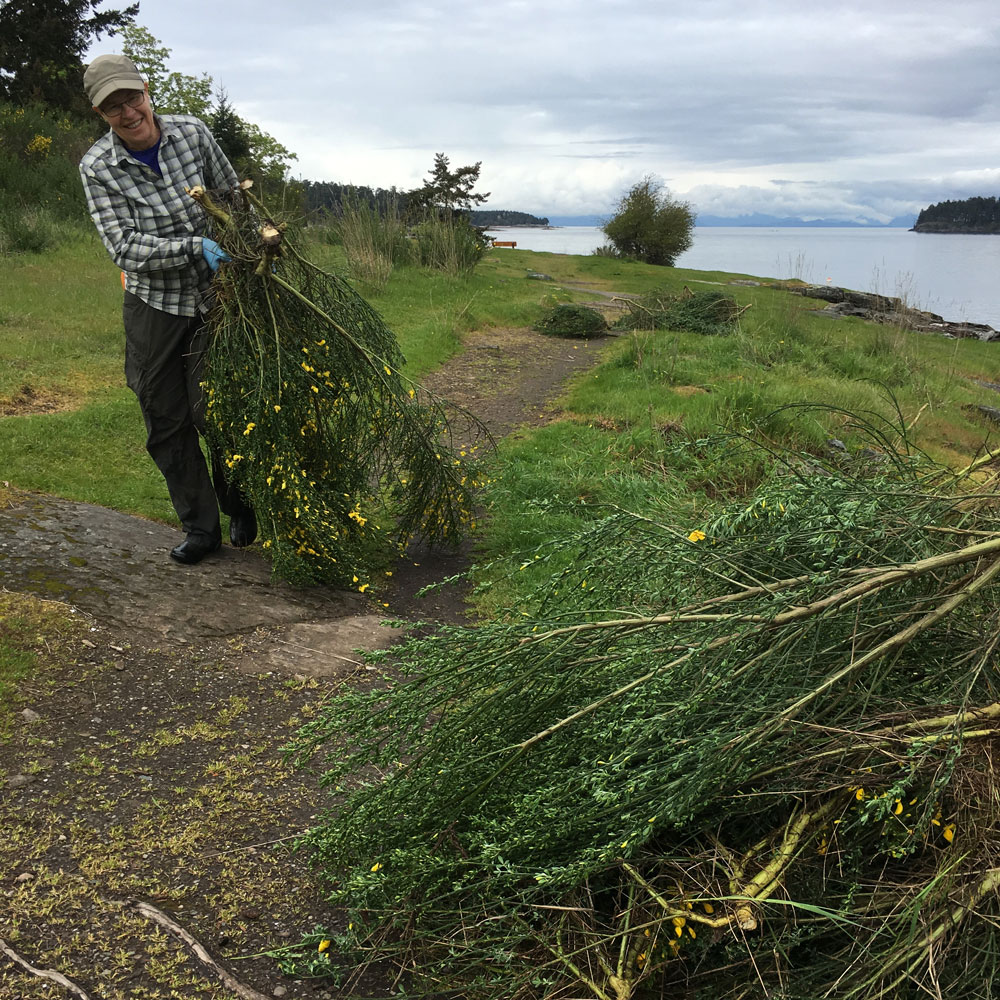
is a very invasive bush, common on highway shoulders, roadsides, abandoned logging trails, forest clearings and other open sunny areas on Vancouver Island and the Gulf Islands. It matures into a strong shrub with main stems up to 7.5 cm in diameter. The flowers are pea-like, in bracts, usually yellow in wild Scotch broom. The twigs are green, hairless, and grooved. It will regrow from cut stumps if green bark is present and the cut is clean.
After 10 years it begins to die but new generations of seedlings usually replace mature stands. Its seeds are distributed through our highway network by the tires of off-road vehicles and into isolated open areas by birds. It out-competes indigenous plants in reproducing, in taking over space, chemically inhibiting neighbouring vegetation, discouraging browsing, and holding viable seeds till the opportune moment to germinate arrive—sometimes decades later. Broom prefers acid soil and good drainage, but is not particular about soil fertility. It withstands drought.
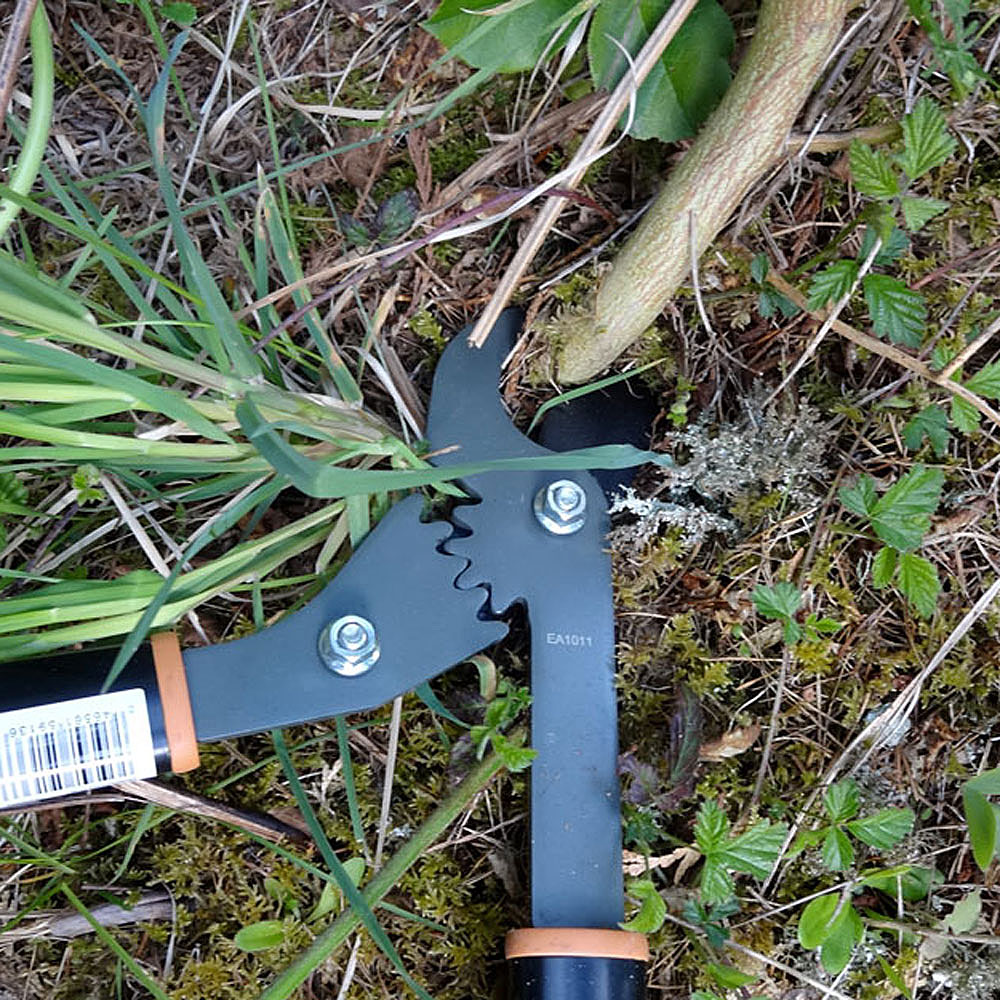
Get rid of your own broom—cut below ground level if possible!
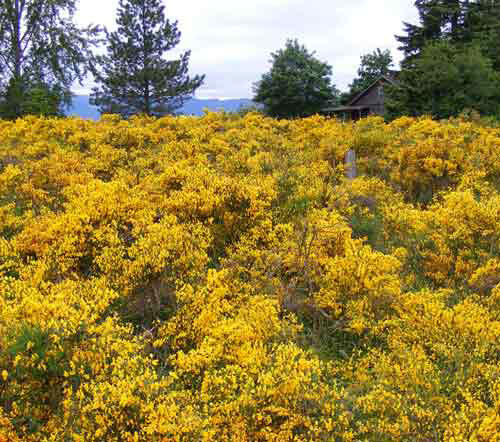
Wherever you see Scotch broom on public land (or your own!), do the whole island a favour and remove it before it goes to seed. Here is a link to broombusters.org that includes a useful video about broom removal. In May and June the broom’s easy to see because of its beautiful yellow blooms. If you need advice or access to the right tools email broom@galtt.ca.
Cutting broom below ground level is by far the best way to remove it. Pulling first-year shoots is easy but may encourage seed germination. If you do pull very young shoots, tamp the soil down afterwards to avoid light getting to seeds in the soil. Do NOT pull older plants —CUT them below ground level if possible. If you cut higher, remove any green shoots from the stump.
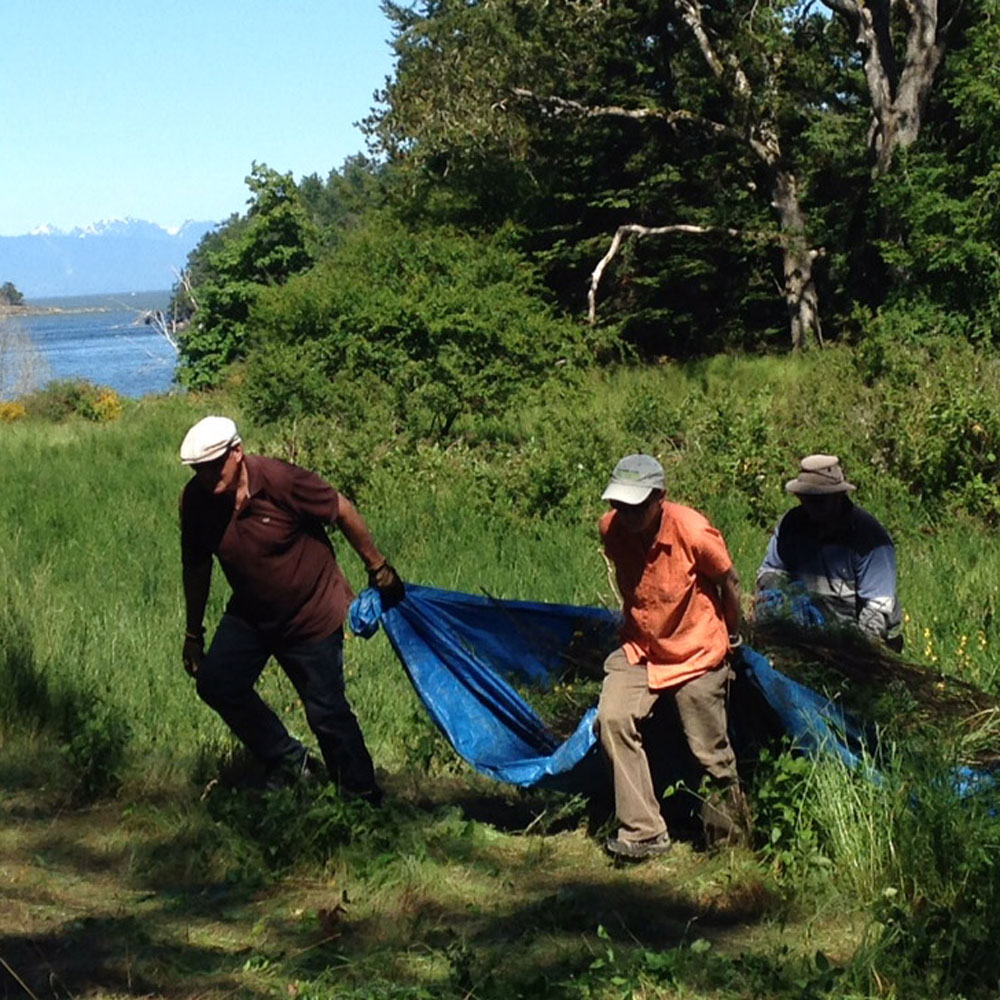
DISPOSAL: Chip it and use it for mulch, but don’t spread the seeds! Or just pile it up and leave it to rot. It’s very effective to pile it on top of another invasive like blackberry or periwinkle, killing it too.
MORE RESOURCES: Invasive Species Council of BC Scotch broom factsheet (pdf).
Gabriola’s regular broom-bashing
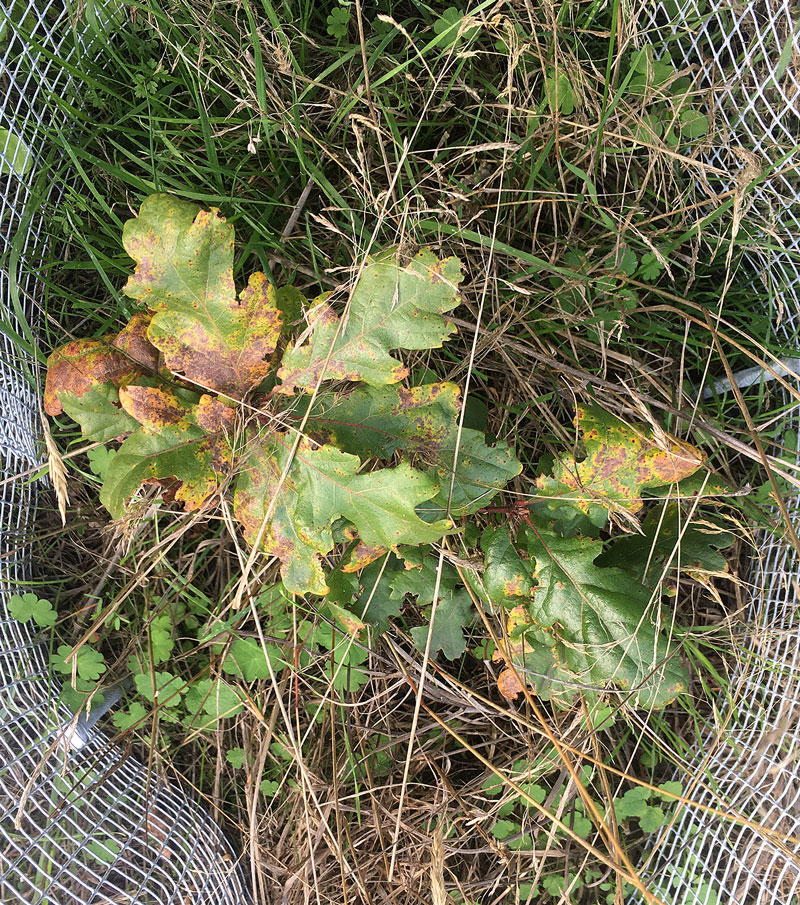
Each May, dozens of enthusiastic broom-bashers (volunteers from GaLTT and the Lions Club) meet at Drumbeg Park to continue the major (ongoing) task of cutting out invasive Scotch broom which threatened to overtake the Camas meadow. It’s always a pleasure to see the lovely spread of blue Camas lilies (Camassia quamash) and yellow Spring Gold (Lomatium utriculatum) blooming on the broom-free meadow. A few Garry oak (Quercus garryana) seedlings can be found in the grass where broom was cut over the last few years. New broom seedlings are there too though, so it’s a constant battle.
Daphne
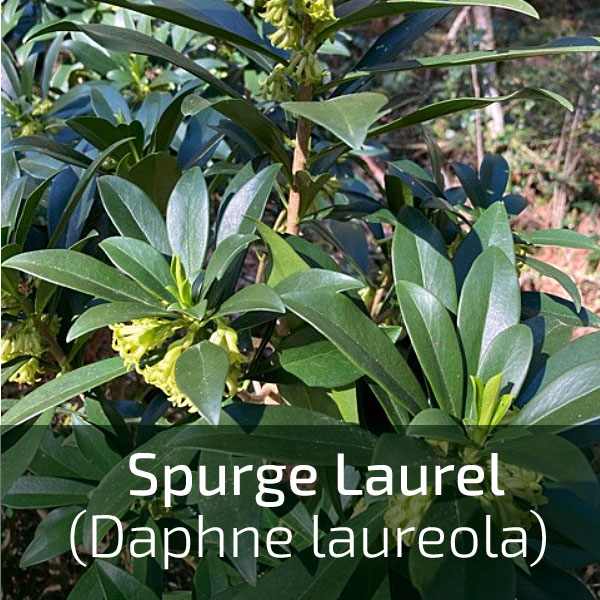
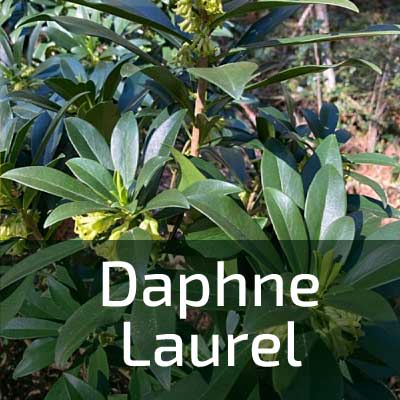
Daphne or spurge laurel (Daphne laureola)
Daphne (spurge laurel) is spreading very rapidly through the understorey of Gabriola’s forests, where it has outcompeted native plants such as salal and Oregon grape. Daphne is alarmingly adaptable, and can grow well in shade or sun, disturbed or undisturbed soil.
All parts of the plant are considered toxic, and the plant is listed with the Canadian Poisonous Plants Information System and Worksafe BC. Though many people have no adverse reaction, it can irritate skin and airways.
The evergreen shrub can look superficially like rhododendron. It has thick green leaves that grow in a whorl and can be up to 1.5 meters high, with multiple stems. It bears tiny clusters of yellow-white flowers early in spring, followed by black berries. Birds and rodents spread Daphne when they disperse the berries. The plant can also sucker.
Please don’t plant it in your garden! Rhododendron or hellebore are good garden alternatives, and there are also other species of Daphne that are safe to plant in gardens.
To remove Daphne, use gloves and pull small plants by hand, especially when the ground is moist. Remove larger plants (more than 30 cm) by cutting the stem below ground level, with as little disturbance to the soil as possible even though this means leaving part of the root system behind. Cutting Daphne above ground level temporarily reduces berry production, but often results in the growth of multiple stems.
DISPOSAL: Seal the plants in dark plastic bags or under a dark tarp and leave them in the sun. Because it contains toxins, don’t burn Daphne in backyard fires or add it to compost that will be used on vegetable gardens. For help with identification, contact invasives@galtt.ca.
MORE RESOURCES: Invasive Species Council of BC daphne information.
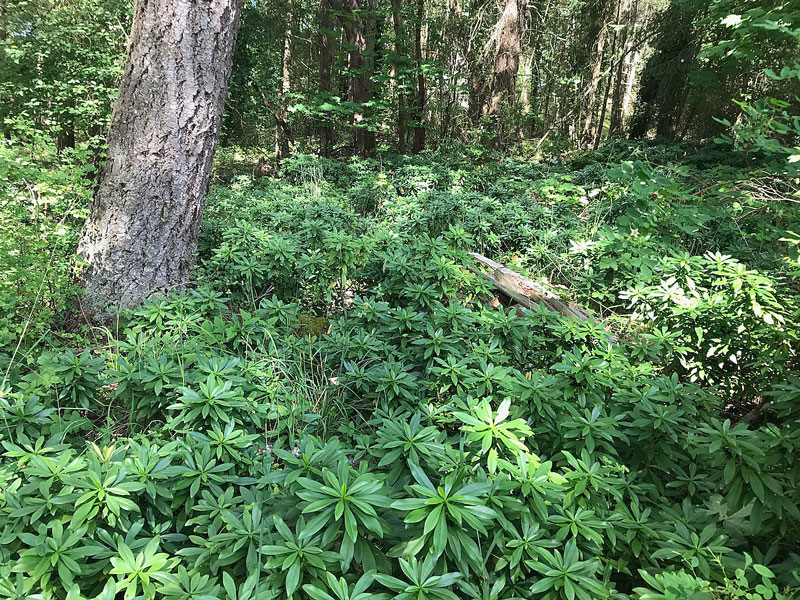
A local daphne infestation—it has effectively replaced much of the forest understorey with a monoculture.
Tansy Ragwort
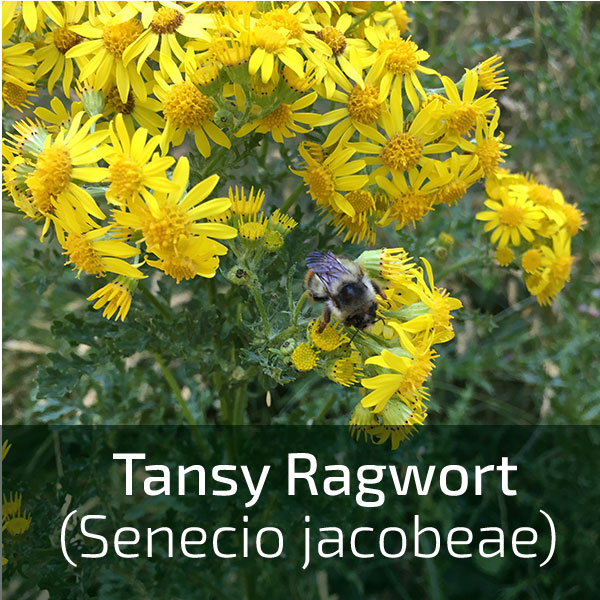
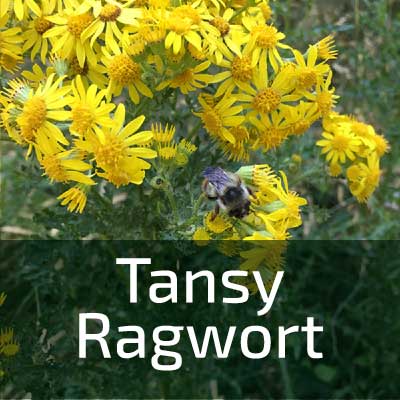
Tansy ragwort (Senecio jacobeae)
Invasive Tansy ragwort is spreading rapidly on Gabriola, Mudge and Valdes Islands, and blooms from July to September. It is common on roadsides and in open sunny forest clearings. The plant has clusters of bright yellow daisy-like flowers, can be from 0.2 to 1.2 metres tall, and has deeply lobed bright green leaves. It is a biennial, not very visible in its first year and blooming in its second year. A single plant can produce 150 thousand seeds!
In hay fields it is important to remove the whole plant because it is toxic to cattle and horses. Although they avoid it while it is growing, they cannot detect it when it is in a load of hay.
Help eradicate it by uprooting and removing the plants before they go to seed. Don’t just cut off the flowers—use protective gloves and make sure you pull out the whole plant including the root system so that it doesn’t regenerate. Tansy ragwort starts as a rosette and eventually grows into a single or multi-stemmed plant. It bolts just before flowering. They’re fairly easy to pull out because they have a fairly shallow root system—they are easiest to pull when they are bolting. The trick to pulling them is to grasp firmly at the base and then slowly tease them, including the roots, out of the ground. If they break, it’s very important to remove the root system remnants, as that will grow into an even more tenacious plant. A tool with a hooked shape can help to pull the root system out by getting the hook under the centre of the roots. Tamp down the spot where the Tansy ragwort was removed. Break or bend the stem at least once, and place the pulled plant over the disturbed ground as a mulch, trying to keep the roots from touching the ground. If the tansy ragwort is already in flower, or has seeds, carefully remove and bag the flower/seed heads, which you will take home and dispose of.
DISPOSAL: On agricultural properties where animals graze, it’s important to bag the whole culled plants for removal. Do not leave them on the ground as they are toxic if eaten by horses, cows, or goats. A great way to deal with culled tansy ragwort is to just stuff the plants into a black plastic garbage bag and seal it. Leave them to compost in the sealed bag for a few months (to make sure no seeds escape) and you’ll get some good, pest-free soil for your garden.
RESOURCES: Invasive Species Council of BC Tansy Ragwort factsheet.
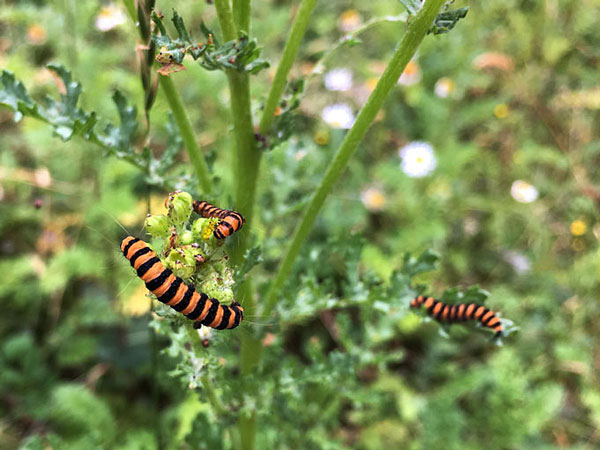
Tansy ragwort does have one good natural enemy—the caterpillar of the cinnabar moth. So if you see any on the ragwort, don’t kill them—leave them nearby to feed on any plants you miss.
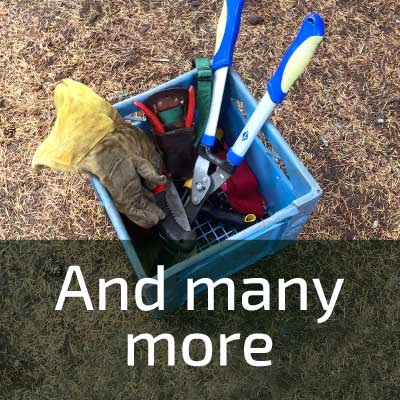
And many more…
The Invasive Species Council of BC has pamphlets with comprehensive information on many of these species: visit their Publications page to download them.
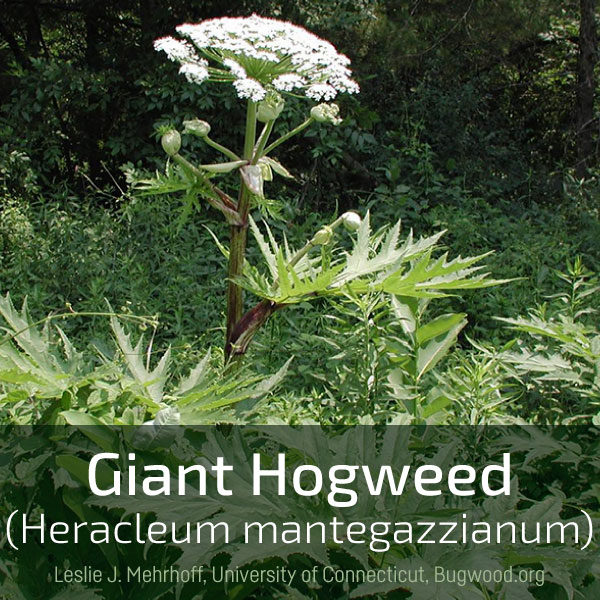
Giant hogweed (Heracleum mantegazzianum)
Giant hogweed (also known as giant cow-parsnip) is an aggressive invader that was introduced as a garden ornamental. It resembles native cow parsnip but is much larger. It can grow to 6 metres. It is adapted to moist areas, competing with native plants and causing riparian damage by erosion with its shallow root system.
It spreads easily and is hard to eradicate. It reproduces by seeds and from perennial buds at its crown. The seeds are abundant and long-lasting in the soil. This plant is a persistent problem in Drumbeg Park in the fenced area behind the public toilets, and can be found elsewhere on Gabriola.
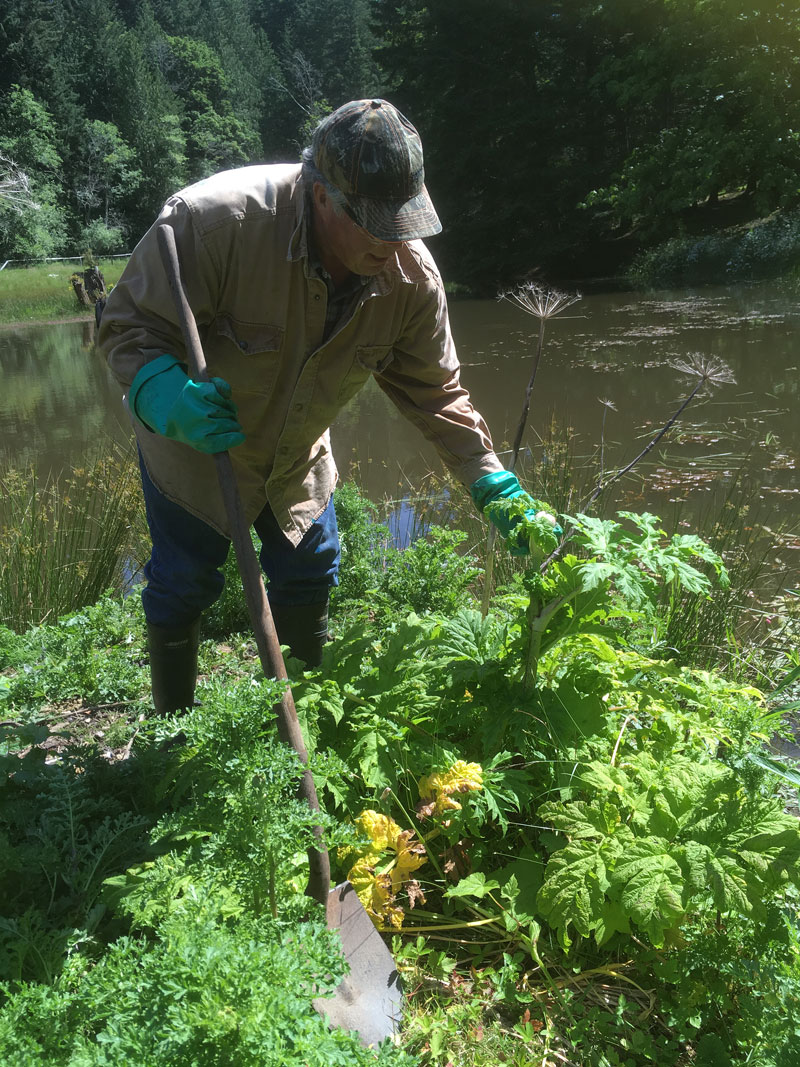
WARNING—DO NOT HANDLE THIS PLANT WITHOUT WORK GLOVES! Its sap on exposed skin causes hypersensitivity to sunlight, resulting in blistering and dermatitis. Scarring and blindness may result.
Management strategy: Use protective clothing and eyewear. Cut off the flowerheads to prevent seed formation. Excavate the plants by severing the roots at least 8 cm below the soil surface. Dispose of plants in strong garbage bags. DO NOT COMPOST. Return to the site to check for regrowth—followup may be needed for 3 to 5 years. Chemical controls can be effective using foliar application in both spring and summer, or stem injection during heavy sap flow in spring.
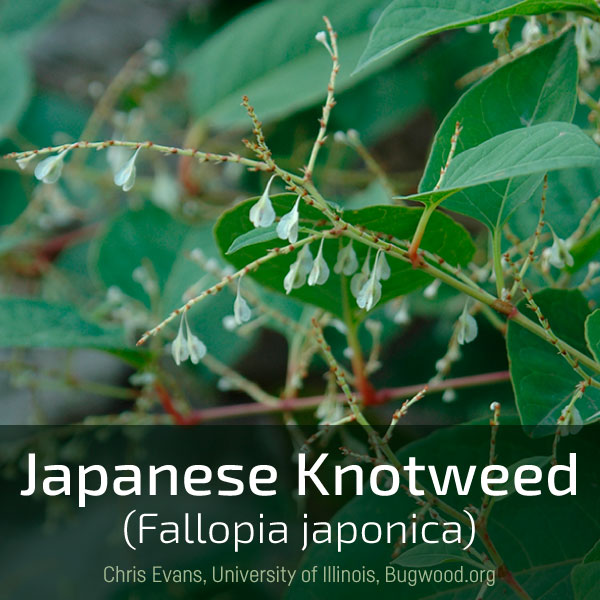
Japanese knotweed (Fallopia japonica)
Knotweeds are among the top ten invasive species listed for eradication in BC. They are native to Asia and were introduced to BC as an ornamental plant, spreading easily from people's gardens. Four species are currently found in BC: Japanese knotweed (Fallopia japonica)—the most common, Giant knotweed (Fallopia sachalenensis), Bohemian knotweed (Fallopia x bohemica), and Himalayan knotweed (Polygonum polystachyum). They are similar in appearance, biology, impacts, and distribution. The leaves of Japanese knotweed (shown here) are heart shaped and rather like lilac. All the knotweeds have extensive, strong root systems, and stalks rather like bamboo.
Knotweeds reproduce "vegetatively" through their roots and stems. Once established, they can grow through concrete and are extremely difficult to eradicate. Grazing and cutting must be repeated frequently and over many years to be effective. Usually herbicides are required for eradication.
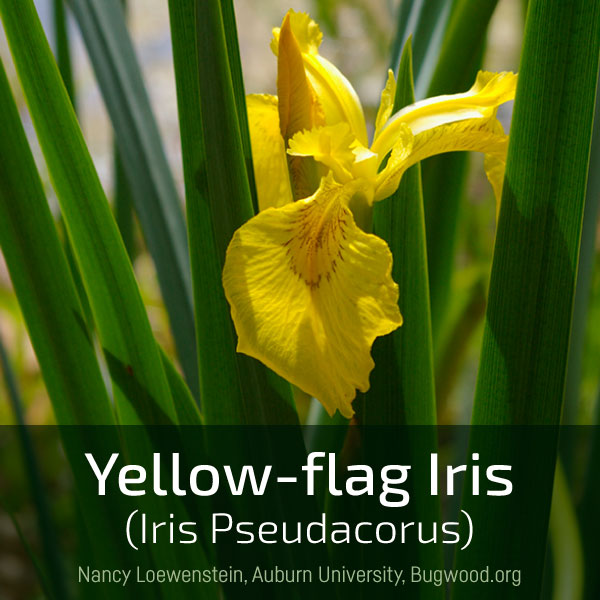
Yellow flag iris (Iris pseudacorus)
Yellow flag iris (Iris pseudacorus) invades ditches, irrigation canals, marshes, stream and lake shorelines, and shallow ponds, displacing valuable plants like cattails, sedges, and rushes that are used by many birds for nesting. Established infestations can reduce the carrying capacity of water storage in temperate wetlands, and can also block irrigation canals and flood control ditches.
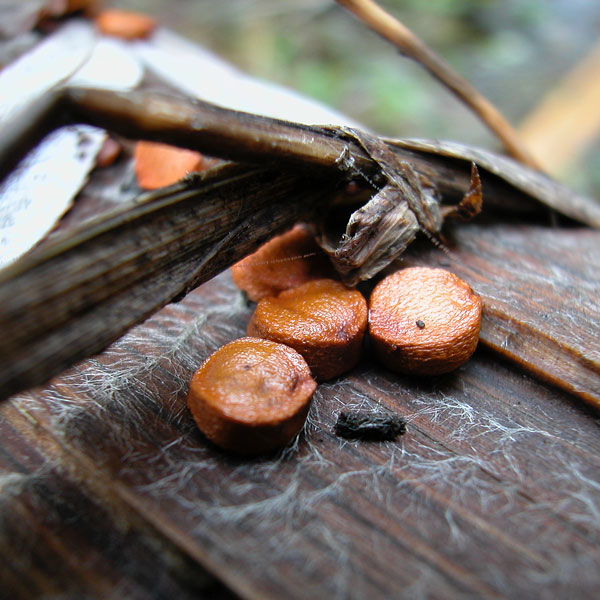
Yellow flag-iris reproduces quickly through seed dispersal and horizontal root systems, creating thickets in the water. Up to several hundred flowering plants may be connected under the water, and fragments can form new plants when they break off and drift downstream.
Yellow flag-iris is widely sold for garden wet areas and ponds, which makes it very hard to control. Plants are identifiable by showy yellow flowers with 3 sepals that curve backward and 3 petals pointing upwards. Leaves fold and clasp the stem at the base in a fan, with long sword-like leaves toward the outside of the plant. At maturity, plants can reach 1.5 metres in height.
WARNING: Yellow flag iris can sicken livestock if ingested, though it is generally avoided by grazing animals. Contact with the resins can cause skin irritation in people.
To remove yellow flag iris:
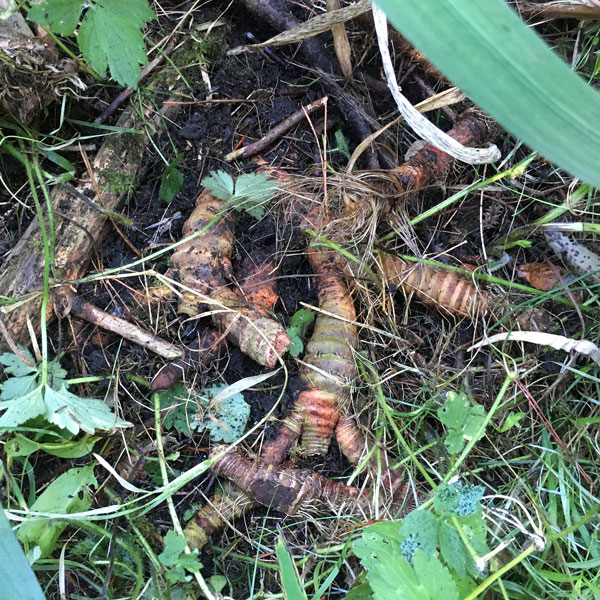
COMPLETELY DIG OUT ALL IRIS RHIZOMES (CORMS) AND REMOVE ALL FRAGMENTS. Even very tiny pieces will grow to form new plants. And even after burning the rhizomes can sprout and seeds can germinate. Because iris seeds float they are easily distributed by flowing water or higher winter water levels. Watch for and pull new plants beyond the site of the original infestation (again, removing all fragments). It is possible to control yellow flag iris to a degree without using herbicides, but to do so requires constant vigilance for years.
The most effective removal method is to cut the stems off and apply an appropriate herbicide to the stump. This may be useful in your contained garden pond but is not advisable in wild wetlands and streams.
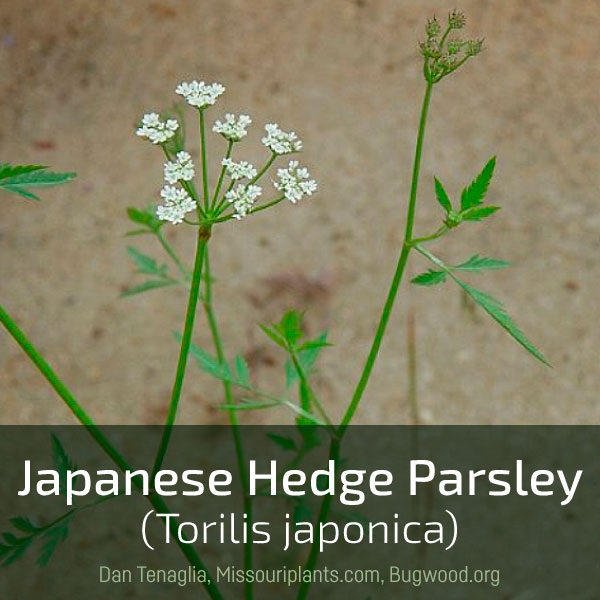
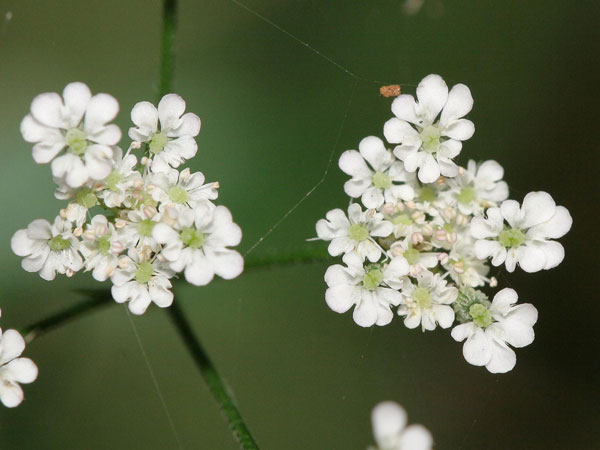
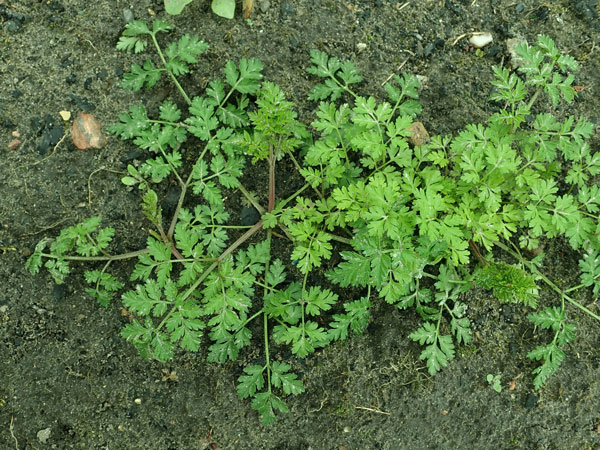
Japanese hedge parsley (Torilis japonica)
This pretty plant has in the last few years invaded Gabriola's roadsides and along trail edges, particularly in the Kensington Lands. It is a biennial herb that grows 2-4 ft (0.6-1.2m) tall when flowering. First-year foliage rosettes are low, parsley-like and green into fall. The stem leaves are alternate, fern-like, 2-5 in. (5.1-12.7 cm) long and slightly hairy. The seeds are spread by scattering, and by people and animals. It is fairly easy to remove but spreads extremely rapidly.
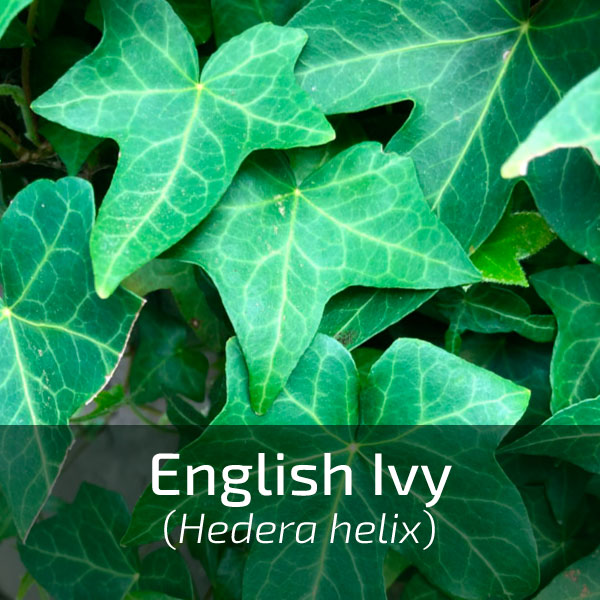
English ivy (Hedera helix)
Gardeners use this highly adaptive evergreen plant as a ground cover. It likes moist, shady locations and spreads rapidly, excluding other plants. It climbs walls and tree trunks using aerial rootlets with matted pads that cling strongly. It prefers darker, rougher surfaces (like bark!).
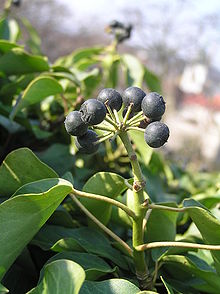
Leaves on the creeping and climbing stems are 5-lobed but high in the crowns of trees the adult leaves on flowering stems are unlobed. The fruits in late winter are most often purple-black and occur on the highest part of the climbing plant.
Growth can be so strong that young trees topple. Where it is established, it is very difficult to control or eradicate. In the absence of active and ongoing measures to control its growth, it tends to crowd out all other plants, including shrubs and trees.
Disposal
... is also a problem
Figuring out how to dispose of invasive plants after you've cut or pulled them (check species pages for recommended strategies) is a real challenge here on Gabriola, because there's no easy on-island solution. Every option has pros and cons, and people may not have appropriate space to dispose of invasives properly on their own property.
GaLTT has been searching for a good solution to this problem for some time now. We often have island disposal sites set up to collect the results of our eradication campaigns, so check our website or email invasives@galtt.ca to find out current plans.
Here's generally what we've learned. See also individual species entries for information particular to those plants.
Onsite disposal
Onsite disposal of invasive plants is preferred because it's convenient, less costly, and minimizes the chances of spreading seeds.
Woody debris (like broom branches) can be piled to dry and rot; brush piles can provide habitat for small creatures. . Small broom or daphne plants can be pulled and left in place. But in many places on Gabriola leaving woody material around is not a viable option because of the increased fire hazard. However, if areas of your property are damp those are the best places for this kind of disposal as the dampness will lessen the fire hazard.
A safer alternative is to have the debris chipped, in which case you can use it for mulch—but watch out for the seeds.
Burning is potentially an option, but not a very practical one; Gabriola's fire regulations prohibit fires over .5m without a permit, and that isn't large or hot enough to deal with invasive plants. In addition burning with smaller fires creates even more air pollution, and in the case of some species may release toxins.
Note:
Do not burn daphne—doing so releases toxins.
Composting
This is probably the best solution for soft plant debris. You can accelerate the composting process by sealing plants in black bags and leaving them to rot, and end up with excellent garden compost.
Note:
- This kind of composting will NOT destroy seeds so it is not suitable for plants cleared during the fruiting season
- DO NOT USE COMPOST from giant hogweed or daphne as they contain toxins
- Yellow iris corms will compost in bags—eventually—but it may take several years for them to do so
Offsite disposal
Where regulations permit, whole or mulched plants can be transported to a solid waste landfill, but transporting them off-island and paying disposal fees costs more, especially if they are not classified as Yard Waste.
